
Singapore is a compact, efficient city-state where multicultural heritage, modern architecture, and one of the world's great food scenes share the same few square kilometres. Use this guide to get oriented, transport, key areas, marquee sights, and practical basics, then follow the links into deeper guides for each district and attraction.
The MRT is the backbone of getting around. From Changi Airport, take the East-West Line to Tanah Merah Station (EW4/CG), then transfer to reach central districts, the journey takes about 30–40 minutes. The network covers 246.6 km across six lines and 146 stations, operating from roughly 5:30 am to past midnight.
Transit payment options
Prime Aces Limousine publishes this guide and offers Corporate Chauffeur Service; Airport Transfer Service; Limousine Rental / VIP Transport; Event Transportation; Cross-Border Transfers.
The MRT handles most movement well, but it has limits, early-morning arrivals with luggage, multi-stop itinerary days, or late-night returns after the network closes. For those situations, a pre-booked chauffeur transfer keeps the schedule intact without waiting for a ride-hail surge. Contact Prime Aces Limousine) to arrange airport pickups, event transport, or cross-border transfers to Malaysia.
Singapore's districts divide broadly into two types: modern precincts built on reclaimed land (Marina Bay, Orchard Road) and historic ethnic enclaves (Chinatown, Little India, Kampong Glam). Each area is walkable within itself; between them, the MRT is the practical link. First-timers focused on heritage and food gravitate toward the enclaves; those chasing the skyline anchor at Marina Bay.
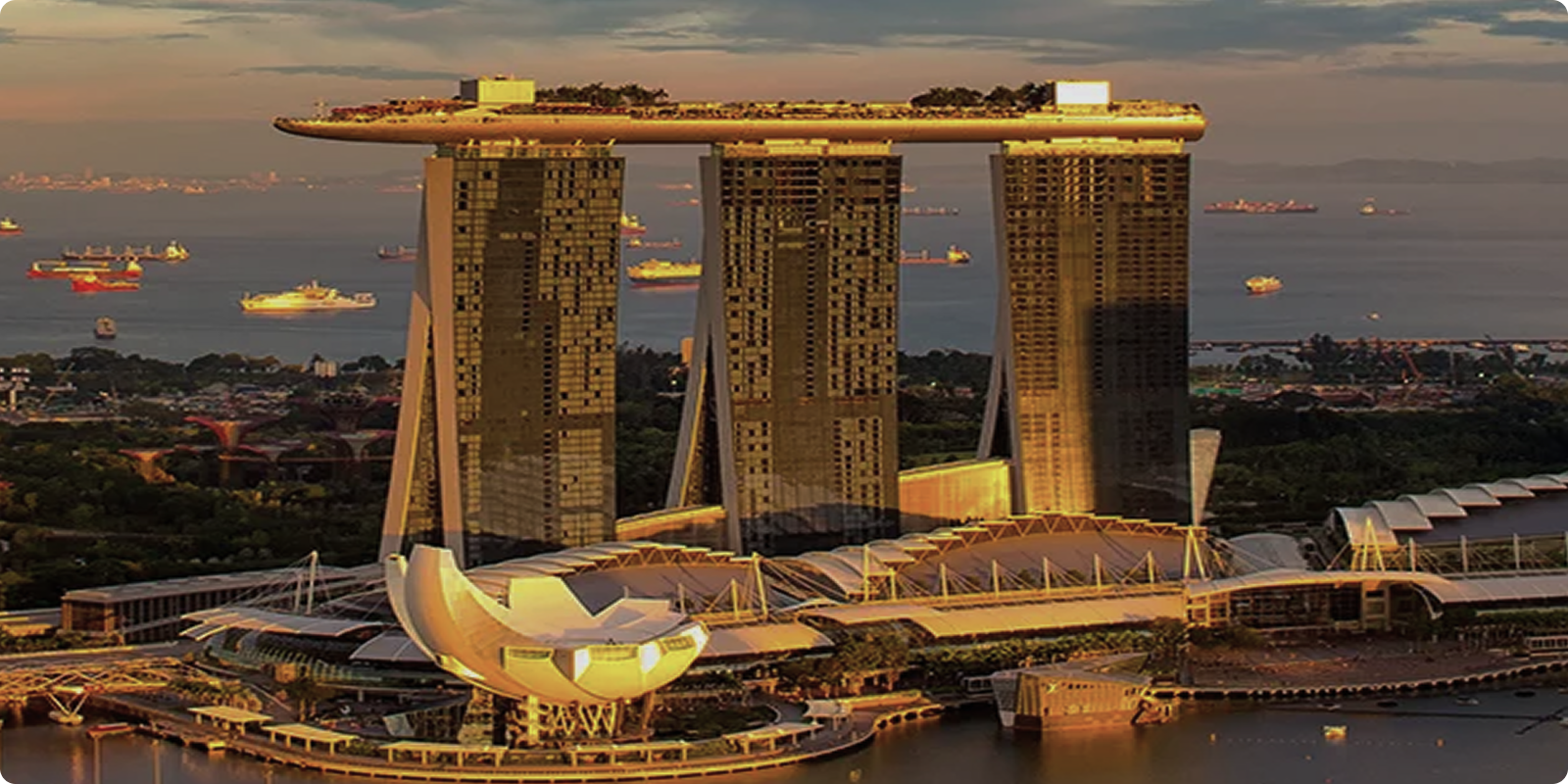
The financial and leisure district built on reclaimed land, anchored by Marina Bay Sands, Gardens by the Bay, and the ArtScience Museum.
Explore Top 15 Attractions in Singapore for a broader city overview.
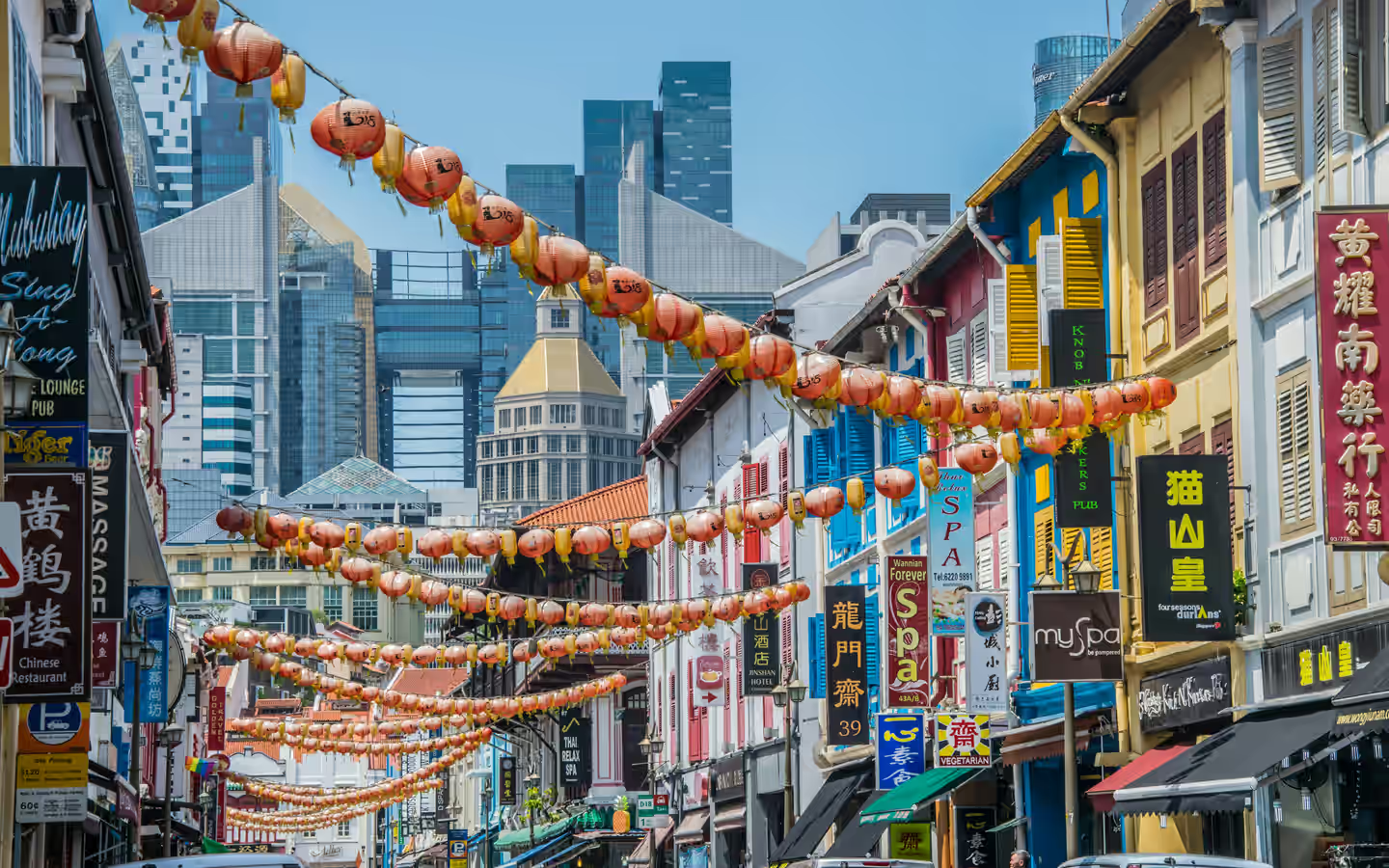
Restored shophouses, clan temples, and two of Singapore's best hawker centres, Maxwell and Chinatown Complex.
Singapore's most immersive cultural district, spice aromas, temple chanting, textile shops, and the 24-hour Mustafa Centre.
The Malay-Arab quarter centred on the golden-domed Sultan Mosque and Haji Lane's boutique cafes.
A 2.2-kilometre retail boulevard lined with malls including ION Orchard, Takashimaya, and Paragon.
A colonial-era trade quay transformed into Singapore's main riverside nightlife strip.
A resort island with Universal Studios, three beaches, and luxury hotels, connected to the mainland by monorail, cable car, or road.
A UNESCO World Heritage Site (inscribed 4 July 2015), the first and only tropical botanic garden on the UNESCO list, spanning 82 hectares near Orchard.
A first visit to Singapore is built around a handful of non-negotiable sights: the Marina Bay Sands SkyPark for the city overview, Gardens by the Bay for the free evening light show, the Botanic Gardens for breathing space, and the heritage enclaves for context on what Singapore was before the towers went up. Most are reachable by MRT in under 30 minutes from anywhere central.
The three-tower complex is the defining image of modern Singapore. The SkyPark observation deck offers 360-degree views, best in late afternoon, timed to catch sunset and then the Gardens by the Bay light show.
Don't-miss: SkyPark at sunset · Time needed: 1–2 hours · MRT: Bayfront (CE1/DT16)
An outdoor park where the 18 Supertrees and two cooled conservatories, Cloud Forest and Flower Dome, sit side by side. The outdoor Supertree Grove and Garden Rhapsody light-and-sound show (nightly at 7:45 pm and 8:45 pm) are free; the conservatories and OCBC Skyway require tickets. Check current pricing on the Gardens by the Bay website before visiting.
Don't-miss: Garden Rhapsody free show · Time needed: 2–4 hours · MRT: Bayfront (CE1/DT16)
Established in 1859, the Gardens demonstrate the evolution from a British colonial botanic garden into a conservation and research institution. Free entry to most areas; open from 5 am. Check the National Parks Board website for current operating hours and orchid garden ticket prices.
Don't-miss: National Orchid Garden · Time needed: 2–3 hours · MRT: Botanic Gardens (CC19/DT9)
One of Asia's most respected open-concept wildlife parks, set on the banks of the Upper Seletar Reservoir. Plan a full morning, the park is large. Read the Singapore Zoo travel guide before your visit.
Don't-miss: Jungle breakfast with orangutans · Time needed: Half to full day · MRT: Khatib, then bus
The Buddha Tooth Relic Temple and Sri Mariamman Temple anchor a streetscape of shophouses and hawker stalls. No single ticketed entry, the experience is the street itself, best walked mid-morning or late afternoon.
Don't-miss: Maxwell hawker centre for lunch · Time needed: 2–3 hours · MRT: Chinatown (NE4/DT19)
The 8.6-metre half-lion, half-fish statue at the mouth of the Singapore River. Free, open-air, and best treated as a five-minute photo stop on a Marina Bay walk.
Don't-miss: Photo framed against Marina Bay Sands · Time needed: 15–20 minutes · MRT: Raffles Place (EW14/NS26)
Discover more at Top 10 Unique Experiences in Singapore.
The practical essentials worth sorting before you land: the right travel window, your visa status, how to pay, and a few local rules that catch first-timers off-guard. Getting these straight takes ten minutes and saves real hassle at the airport or the hawker queue.
Most Western passport holders, including US, UK, EU, Australian, and Canadian citizens, can enter without a visa for tourism. Check your specific nationality at ica.gov.sg, as requirements vary and bilateral arrangements change.
Take the MRT on the East-West Line and transfer at Tanah Merah Station (EW4/CG) to reach central districts; the journey takes about 30–40 minutes. Taxis and ride-hail apps are also available from the airport's arrival halls.
Plan around five days for a first visit, enough to cover Marina Bay, the heritage enclaves, Sentosa, and the Botanic Gardens without rushing. Three days works if you prioritise tightly.
Hawker centre meals run roughly SGD 5–10, and the MRT is cheap, so the food and transport floor is accessible. Accommodation and ticketed attractions push costs up; mid-range travellers typically spend around SGD 230–380 per day all-in.
February to April is generally the most comfortable window, with lighter rainfall compared to the wetter months from September to March. The heat and humidity are present year-round, so indoor breaks are part of any itinerary.
Fixed rates, 24/7 operations, flight-tracked pickups. PAL handles the ground transportation.


.png)
.png)
.png)
.png)
.png)
.png)
.png)
.png)
.png)
.png)
.png)
.png)