
Discover the amazing 5.5-ton solid gold Buddha at Wat Traimit. Get essential visitor info on hours, fees, dress code & the incredible story behind this hidden treasure.
Are you planning a trip to Bangkok? If so, you absolutely must add Wat Traimit to your itinerary. This temple houses one of Thailand's most precious treasures—a solid gold Buddha image that remained hidden for centuries. As a visitor who's walked these grounds, I'm excited to share everything you need to know before your visit.
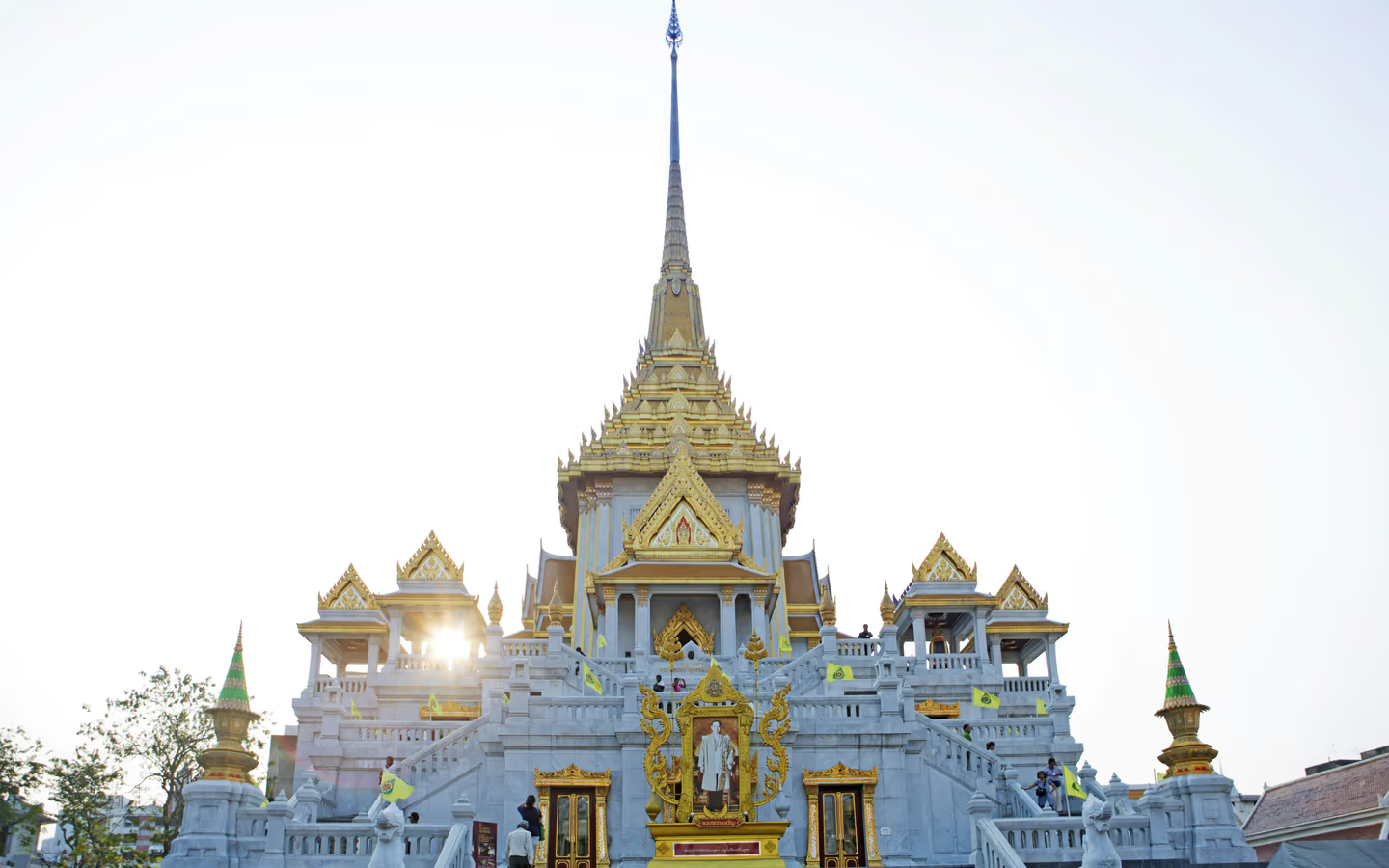
Wat Traimit Witthayaram Worawihan (to use its full name) is a Theravada Buddhist temple located in Bangkok's vibrant Chinatown district. While the temple itself has historical significance, it's primarily famous for housing the world's largest solid gold Buddha image.
The temple was originally built during the reign of King Rama III (1824-1851), though most of what you see today was rebuilt between the 1930s and 1940s. In 1956, it received royal status, becoming a second-class royal temple.
The story behind the Golden Buddha is what makes Wat Traimit truly special. For centuries, this priceless treasure remained completely hidden from the world.
In 1955, the temple was moving what they thought was just an ordinary plaster Buddha statue. During the move, the ropes broke, and the statue fell to the ground. The accident cracked the outer plaster shell, revealing something extraordinary underneath—solid gold!
It turned out that centuries earlier, Siamese craftsmen had covered this massive gold statue with a layer of plaster to hide it from invading armies. Over time, as generations passed, people completely forgot what lay beneath the plain exterior
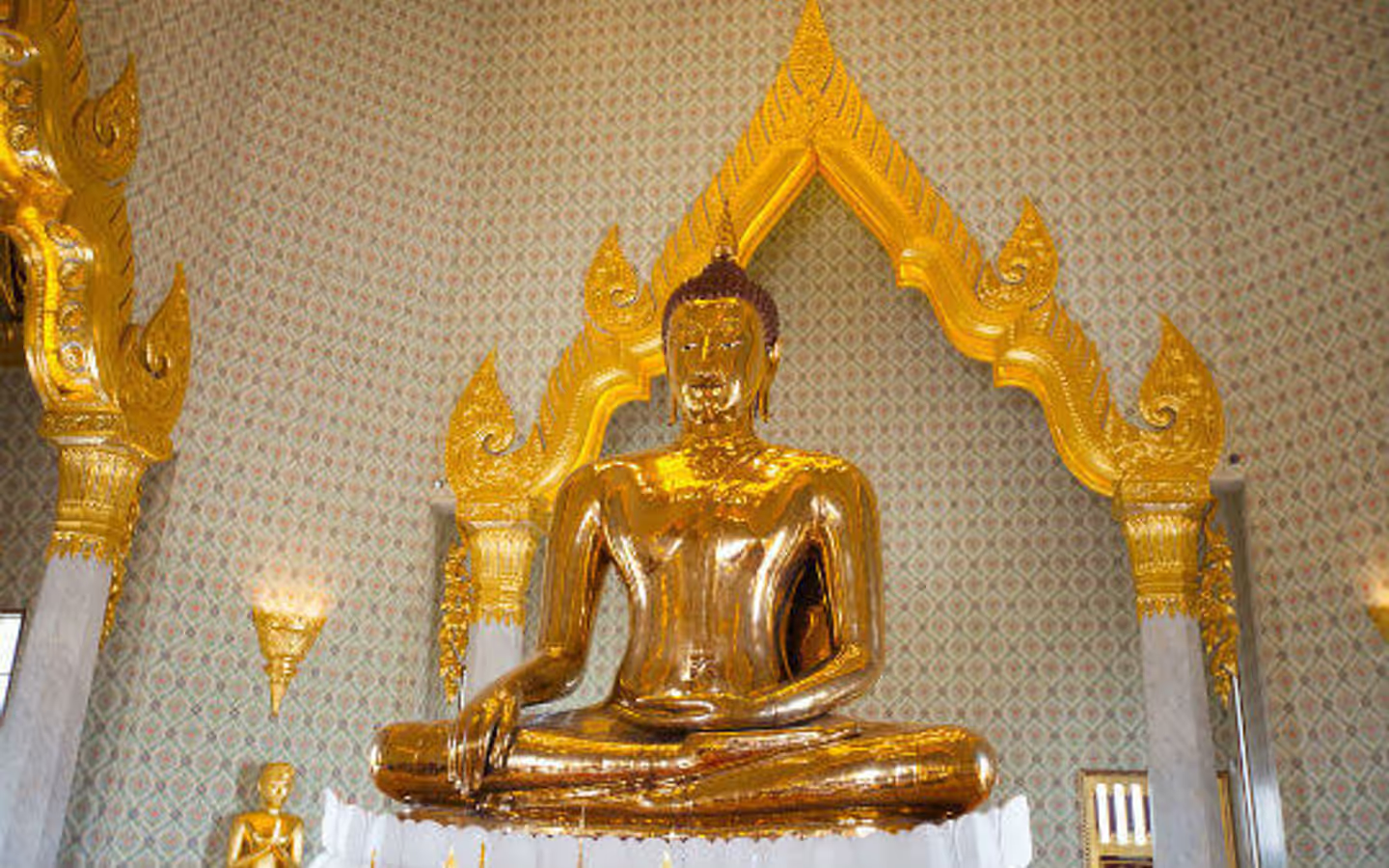
Today, this Buddha image (officially named Phra Phuttha Maha Suwanna Patimakon) stands nearly 10 feet tall and weighs approximately 5.5 tons. Its gold is estimated to be worth over $250 million.
The main highlight is, of course, the Golden Buddha. The statue sits on the top floor of a four-story marble-clad pavilion called the Mondop, which was completed in 2007 and officially opened in 2010. The gleaming Buddha sits in the "subduing Mara" pose, with one hand pointing to the earth.
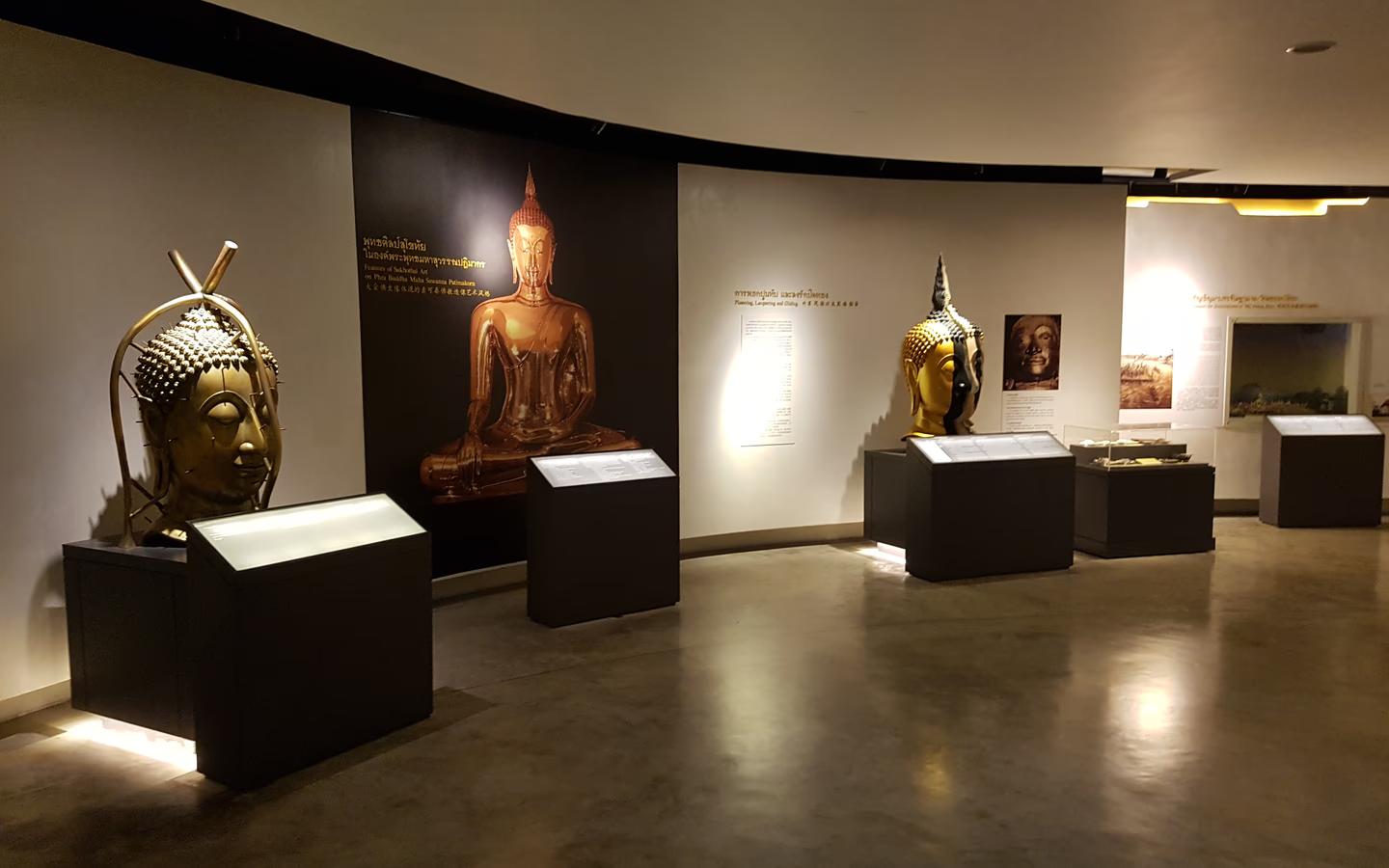
On the second floor of the building, you'll find a museum dedicated to the history of the Golden Buddha. Interactive displays tell the fascinating story of how the statue was discovered and detail its artistic significance. The museum does a wonderful job explaining the cultural and historical context of this amazing artifact.
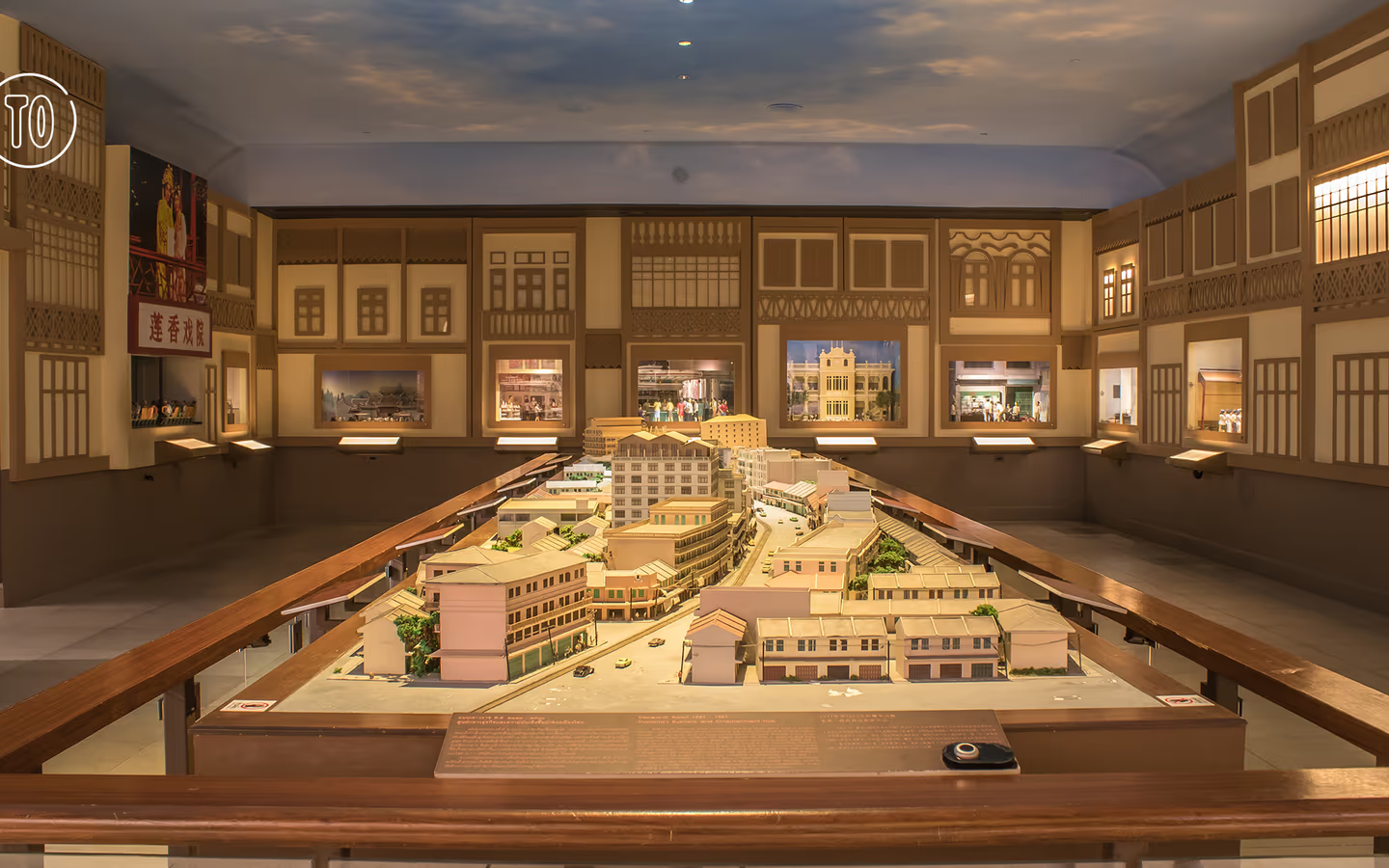
The third floor houses the Yaowarat Chinatown Heritage Center, which documents the history of Chinese immigrants in Bangkok. The exhibits showcase how Chinese culture has influenced and contributed to Thai society. You'll learn about the early settlers, their struggles, and how Bangkok's Chinatown became what it is today.
The temple complex itself is worth admiring. The main chapel (ubosot) and monks' quarters, built in 1937 and 1947, received an architectural conservation award in 2011. The white and gold structures exemplify traditional Thai temple architecture.
Location: 661 Charoen Krung Rd, Talat Noi, Samphanthawong, Bangkok 10100
Here are the best ways to reach the temple:
Wat Traimit is open daily from 8:00 AM to 5:00 PM.
The museums generally operate from 9:00 AM to 5:00 PM, with the last admission at 4:00 PM.
Thai nationals usually pay reduced fees.
As with all Buddhist temples in Thailand, proper attire is required:
If you forget to dress appropriately, don't worry. The temple often has sarongs available to borrow at the entrance.
Early morning (8:00-10:00 AM) and late afternoon (3:00-5:00 PM) typically have fewer crowds. Weekdays are generally less busy than weekends.
If possible, avoid visiting during major Thai holidays when the temple can be extremely crowded with local worshippers.
Photography is allowed in most areas, including of the Golden Buddha. However, flash photography might be restricted in certain sections, particularly in the museums.
While there are no official guides at the temple, many Bangkok tour operators include Wat Traimit on their itineraries. Having a knowledgeable guide can greatly enhance your understanding of the temple's history and significance.
Plan to spend 1-2 hours exploring the temple and museums thoroughly. If you're just visiting the Golden Buddha, 30 minutes might be sufficient.
The main temple building has stairs, which might be challenging for visitors with mobility issues. The museum building has an elevator, making the Golden Buddha and museums accessible to most visitors.
Wat Traimit's location in Chinatown makes it easy to combine with other popular attractions:
Wat Traimit offers visitors a perfect blend of spiritual, historical, and cultural experiences. The Golden Buddha's story of being hidden and rediscovered is a fascinating slice of Thai history, while the museums provide deeper context about both the statue and Bangkok's Chinese community.
Whether you're a history buff, interested in Buddhism, or simply want to see one of Bangkok's most valuable treasures, Wat Traimit deserves a spot on your itinerary. The temple stands as a testament to Thailand's rich cultural heritage and artistic achievements.
Don't rush your visit—take time to appreciate not just the magnificent golden Buddha but also the detailed exhibits that tell the story of this remarkable place and the communities that have shaped it through centuries.
PAL tracks flights, briefs drivers, and prepares name boards before the car leaves, so you do not have to wonder whether anyone is there. If you need Airport Transfer Service in Bangkok for an upcoming arrival, or Corporate Chauffeur Service in Bangkok for a working day, PAL is ready to support you.
.png)
Corporate travel in Singapore depends on more than arranging a vehicle for an executive, client or visiting delegation. The quality of the service is reflected in how carefully each journey is planned, communicated and managed from pickup to drop-off.
.png)
Getting around Johor Bahru is straightforward when the journey only involves one pickup and one destination. It becomes a different kind of booking once Senai Airport, several stops, meetings across different parts of Johor or a longer journey to Desaru enter the itinerary.
.png)
Booking a chauffeur in Singapore is easy enough. The more useful question is what happens once the journey becomes more demanding: a Changi arrival shifts, several meetings run back-to-back, or an executive's schedule changes halfway through the day.


Fixed rates, 24/7 operations, flight-tracked pickups. PAL handles the ground transportation.


.png)
.png)
.png)
.png)
.png)
.png)
.png)
.png)
.png)