
Getting a professional chauffeur booking right takes more preparation than most corporate travellers expect. The service itself is straightforward. What separates a smooth, productive engagement from a frustrating one is the work done before the vehicle arrives.
This guide covers hourly and multi-day chauffeur service from the ground up: how to plan a booking, what to expect from extended arrangements, how to communicate with your chauffeur professionally, and how to extract the most operational value from both formats.
Hourly chauffeur service, sometimes called "as-directed" or "on-account" service, keeps a dedicated driver with you throughout the booking. There are no per-stop fees. The chauffeur waits while you're in meetings, handles luggage between venues, and adapts to schedule shifts as the day develops. It suits days with multiple stops, unpredictable timing, or situations where calling a fresh ride between each appointment creates unnecessary friction.
The planning happens before you confirm the booking, not after.
You don't need a minute-by-minute schedule. You do need a working list of addresses, a realistic estimate of time at each stop, and a sense of your priorities if the day runs long. Share this with the service provider when booking, not on the day itself.
Professional chauffeurs prepare routes in advance, including alternate options for traffic. The more detail you provide upfront, the more precisely they can buffer between stops. A chauffeur who knows you have a 3:00 PM meeting across town will position accordingly after your 1:30 PM lunch. One who learns about it at 2:45 PM cannot.
Prime Aces Limousine recommends at least 24- hours' notice for standard bookings. For multi-vehicle or event arrangements, at least one week to one months is the appropriate lead time. Tighter timelines reduce your options and reduce the chauffeur's preparation window.
Most itineraries underestimate transition time. Account for building security, parking clearance, lobby waits, and the time it actually takes to walk from a meeting room to a waiting vehicle. A realistic buffer is 10 to 15 minutes between stops for urban Southeast Asian business centres, where lobby-to-kerb time in a Grade A office building can consume more time than anticipated.
If your schedule is firm on the back end (a flight, a client dinner with a reservation), work backwards from that fixed point. Communicate the hard deadline to your chauffeur explicitly. That one piece of information changes how they manage the entire day.
Multi-day bookings are structurally different from single-trip or hourly arrangements. The chauffeur is not just a driver for one engagement. Over several days, they become an operational asset for a programme, roadshow, or site visit series.
Understanding what's included, and what isn't, prevents misaligned expectations.
Most professional multi-day chauffeur services operate within a daily cap, typically 10 hours and a set kilometre allowance per day. Within that cap, the service covers fuel, tolls, and in many cases bottled water and in-vehicle charging. Overtime beyond the daily cap is charged at an agreed hourly rate confirmed at booking.
Multi-day rates often reflect the length of the engagement. Booking a chauffeur across five consecutive business days generally carries a better per-day rate than five separate single-day bookings. If you know the programme duration, confirm the pricing structure upfront.
For regional roadshows across Singapore, Kuala Lumpur, Hong Kong, or Bangkok, the planning layer becomes more involved. The chauffeur needs the programme itinerary in advance: which venues, what sequence, approximate time at each location. Providing this at least 48 hours before the first day allows the provider to assign and brief the right driver, coordinate handoffs between cities if applicable, and flag any route or timing conflicts before they become day-of problems.
A professional chauffeur in an extended arrangement does more than drive between confirmed addresses. On a well-managed multi-day booking, the chauffeur carries forward context from previous days. They know the executive prefers a quiet vehicle in the morning, that the afternoon programme runs 20 minutes long, and that the hotel drop-off requires a specific entrance due to building access.
Some providers support multi-day bookings with a designated operations contact accessible via WhatsApp group with both coordinators and the assigned chauffeur. This creates a direct communication channel for real-time updates without routing every query through a central booking desk. For busy roadshows or multi-stop programmes, that channel is operationally useful.
Professional chauffeur service operates on a different communication register than ride-hailing. The standards are more formal. The expectations run in both directions.
Confirm pickup time, location, and any relevant passenger details when booking. If you're collecting a client or a senior executive, provide the chauffeur with the passenger's name and, where appropriate, a brief note on protocol (for example, if the passenger prefers silence, or requires the vehicle to wait at a specific terminal entrance).
Most professional providers send chauffeur and vehicle details ahead of the trip. Verify these details. At pickup, the chauffeur should be identifiable by name and vehicle registration before the passenger enters the vehicle.
If your schedule shifts significantly after booking, communicate the change as early as possible. Some adjustments are straightforward to accommodate. Others, particularly those affecting timing by more than 30 minutes or adding a materially different stop, may require confirmation of availability and could affect the final billing.
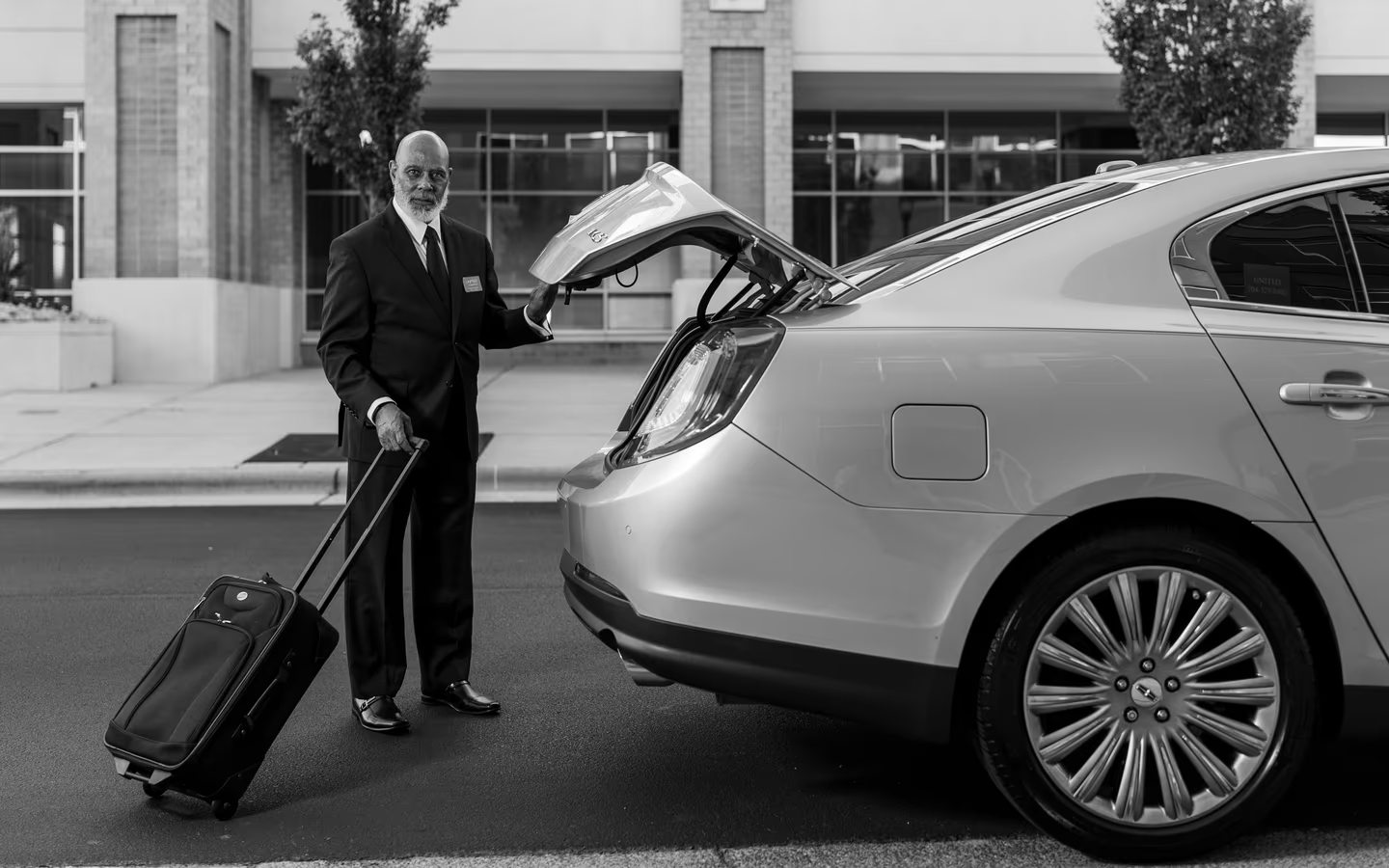
Allow the chauffeur to open and close the vehicle door. This is part of the service protocol, not a courtesy offer that requires a response. The appropriate default seating position for a sole passenger is the rear passenger side.
For vehicle preferences such as temperature, music, or privacy for a call, communicate these directly but briefly. "Could you lower the air conditioning a degree?" is appropriate. Adjusting the controls independently, without asking, is not.
Unless you need to work or make calls, allow the chauffeur to manage the conversation level. Chauffeurs are trained to gauge when a passenger wants quiet and when they're open to a brief exchange. Excessive or prolonged conversation can distract from driving. Particularly on unfamiliar urban routes in congested city centres, silence is a practical contribution to a safe journey.
The first morning of a multi-day programme is the right moment to establish working preferences clearly. How the chauffeur performs on day one is influenced by what you tell them before departure, not by what you correct on day three.
If the day's plan changes materially, communicate via the agreed channel, typically WhatsApp, as early as possible. Waiting time is part of the booking cost whether or not the vehicle is moving, so informing the chauffeur of a delay is courteous and allows them to manage their position and preparation accordingly.
The operational case for professional chauffeur service rests on productivity and predictability, not comfort. Here's how to extract the full return.
Hourly service suits days with multiple stops and variable timing. Point-to-point transfers suit fixed, single-destination journeys. Booking an hourly rate for a straightforward airport transfer is usually unnecessary. Booking point-to-point for a day with six meetings across the city is operationally inefficient and will likely cost more once you add up individual bookings.
If a multi-day programme involves only a few hours of actual travel per day, an hourly engagement rather than a full-day rate may be more cost-effective. Raise this with your provider at the planning stage. A good operator will advise the structure that fits the actual usage pattern.
Professional chauffeur services confirm rates at booking. No surge pricing. No variable charges based on time of day or demand. For corporate travel programmes, this predictability has direct administrative value. Finance teams receive accurate documentation. Expense reports don't carry unexplained variance between trips that look identical on paper.
For an executive whose time carries a high internal cost, reclaiming two hours of productive work per week during vehicle travel translates to material value over a quarter. A quiet, connected vehicle with no routing decisions to make is a working environment. That's a different calculation from the cost of a Grab booking.
Fragmented bookings across city-specific operators create coordination overhead. Different contact points, inconsistent service standards, and no single source for documentation or escalation. For companies with travel across Singapore, Kuala Lumpur, Hong Kong, and Bangkok, a regional provider operating under unified protocols removes that overhead.
PAL has completed over 13,400 trips across Southeast Asia's key business centres under consistent service standards. For Executive Assistants managing C-suite travel across multiple markets, that consistency matters more than any single-trip feature.
Before booking:
At booking:
During the engagement:
At close of engagement:
If you're planning a roadshow, executive site visit, or ongoing C-suite travel programme across Southeast Asia's business centres, the planning decisions outlined here translate directly into fewer day-of complications and cleaner programme execution. Talk with our team to discuss the booking structure that fits your specific programme.
For standard bookings, at least 24- hours' notice is recommended. Airport pickups with meet-and-greet require at least 24 hours. For multi-vehicle event bookings or multi-day programmes, at least one week to one month in advance is the appropriate lead time.
Hourly service keeps a dedicated chauffeur with you throughout the booking with no per-stop fees and full schedule flexibility. It suits days with multiple stops or variable timing. Point-to-point transfers are more cost-effective for single, fixed-destination journeys.
Use the agreed communication channel, typically WhatsApp, as early as possible. Informing the chauffeur of delays or itinerary changes promptly allows them to adjust their position and preparation. Waiting time is part of the booking cost regardless of whether the vehicle is in motion.
Standard inclusions generally cover fuel, tolls, bottled water, and in-vehicle charging. Extended engagements with professional providers may also include a dedicated operations contact, real-time itinerary coordination, and flight monitoring. Always confirm what's included at the time of booking.
No. The correct approach is to communicate your preference to the chauffeur directly. Adjusting vehicle controls without asking is outside professional chauffeur etiquette. A brief, clear request is the right way to manage in-vehicle preferences.
.png)
Corporate travel in Singapore depends on more than arranging a vehicle for an executive, client or visiting delegation. The quality of the service is reflected in how carefully each journey is planned, communicated and managed from pickup to drop-off.
.png)
Getting around Johor Bahru is straightforward when the journey only involves one pickup and one destination. It becomes a different kind of booking once Senai Airport, several stops, meetings across different parts of Johor or a longer journey to Desaru enter the itinerary.
.png)
Booking a chauffeur in Singapore is easy enough. The more useful question is what happens once the journey becomes more demanding: a Changi arrival shifts, several meetings run back-to-back, or an executive's schedule changes halfway through the day.


Fixed rates, 24/7 operations, flight-tracked pickups. PAL handles the ground transportation.


.png)
.png)
.png)
.png)
.png)
.png)
.png)
.png)
.png)