
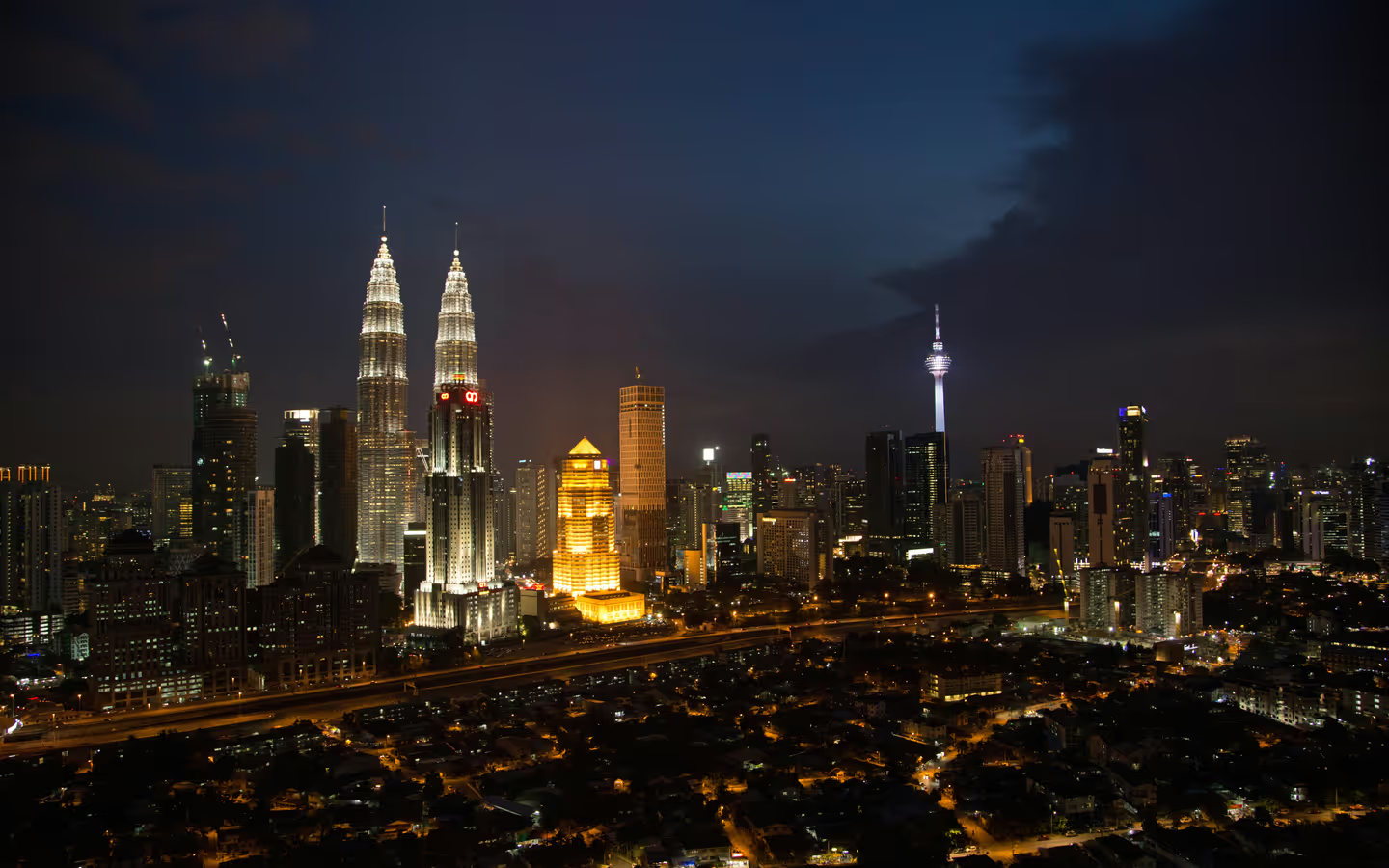
Kuala Lumpur packs a lot into a compact footprint: the Petronas Twin Towers anchor a modern skyline, while Malay, Chinese, and Indian quarters sit within metro stops of each other. Plan 3–4 days, follow the rail lines between districts, and use this guide as your starting map before drilling into the neighbourhood and attraction pages below.
The rail network is the backbone of any KL itinerary. The KLIA Ekspres connects the international airport to KL Sentral in 28 minutes, running every 20 minutes daily including public holidays, with service extended to 1:00 AM from KLIA T1 and T2. From KL Sentral, the MRT, LRT, Monorail, and KTM Komuter fan out to cover every major sight.
Transit payment options
Prime Aces Limousine publishes this guide and offers Corporate Chauffeur Service; Airport Transfer Service; Limousine Rental / VIP Transport; Event Transportation; Cross-Border Transfers.
After the KLIA Ekspres run and a packed few days juggling MRT, LRT, and Monorail transfers between KLCC and the heritage core, many travellers just want the airport leg to require zero thinking. Prime Aces Limousine tracks your flight and has the driver waiting regardless of delays. One fixed price is locked in before you fly, so there is no surge pricing and no taxi queue to negotiate after a long haul.
Beyond the airport transfer, the same service covers a chauffeured day for business meetings across the Golden Triangle. It also handles a limousine for an evening event, or a cross-border transfer toward Singapore, for a small group or a solo traveller alike.
First-time bookings can also claim an introductory offer by signing up, with the details handled in the sign-up form itself.
KL divides neatly into a modern core and a heritage belt. The Golden Triangle (KLCC and Bukit Bintang) suits first-timers and shoppers; the heritage strip from Merdeka Square through Chinatown and Brickfields suits culture-focused travellers. Most visitors move between both in the same day.
The country's financial and commercial heart, where the Petronas Towers, Suria KLCC mall, KLCC Park, and Aquaria sit in one walkable cluster.
KL's main entertainment district, with shopping malls (Pavilion KL, Berjaya Times Square), street food on Jalan Alor, and a nightlife strip at Changkat Bukit Bintang.
One of KL's oldest neighbourhoods, heritage shophouses, covered markets, temples, and street food all day, with the real energy arriving after dusk.
Dataran Merdeka sits in front of the Sultan Abdul Samad Building, with one of the world's tallest flagpoles (about 95 metres) marking the spot where Malaysian independence was declared.
A compact neighbourhood of sari shops, spice markets, banana-leaf restaurants, and Hindu temples, a short walk from KL Sentral.
A residential lifestyle neighbourhood where locals and expats eat, brunch, and socialise, not a sights district, but worth an evening if you have time.
A first visit to KL is built around five or six anchors: the Petronas Towers above everything, then Batu Caves, KL Tower, the heritage cluster near Merdeka Square, and KLCC Park for an easy evening. Everything else fills the gaps.
Standing 451.9 metres over 88 floors, the Towers are KL's defining landmark. Visitors can walk the 58-metre Skybridge at the 41st floor and reach the 86th-floor observation deck for 360-degree city views. Book tickets online to choose your time slot; check the official schedule at petronastwintowers.com.my before travel, as hours vary by day.
Don't-miss: Skybridge walk · Time needed: 1.5–2 hours · MRT: KLCC station
Full Petronas Towers visitor guide →
A Hindu temple complex inside ancient limestone formations estimated at around 400 million years old. The 272 coloured steps lead to the main Temple Cave; a 42.7-metre golden statue of Lord Murugan guards the entrance. Entry to the Temple Cave is free; arrive before 8:00 AM to beat the crowds, and dress modestly (sarongs available at the entrance if needed).
Don't-miss: Temple Cave staircase · Time needed: 1.5–2 hours · Access: KTM Komuter, Batu Caves terminus
The seventh tallest telecommunications tower in the world offers city views from an observation deck at 276 metres, with outdoor Sky Deck and Sky Box options. Check current weather before you go, the outdoor decks close in bad conditions. Confirm hours at menarakl.com.my before travel.
Don't-miss: Sky Deck views · Time needed: 1 hour · Access: Monorail to Bukit Nanas, then a short walk
A 50-acre park designed by Roberto Burle Marx, with a jogging track, children's playground, and a fountain light show most evenings (typically 8:00–10:00 PM). Free entry; good for an early morning run or a post-tower wind-down.
Don't-miss: Evening fountain show · Time needed: 30–60 minutes · MRT: KLCC station
One of KL's oldest mosques, at the confluence of the Klang and Gombak rivers, with Moorish and Mughal architecture across three domes and two minarets. Non-Muslim visitors are welcome outside prayer times; modest dress required, and robes and headscarves are available to borrow at the entrance. Entry is free.
Don't-miss: River confluence views · Time needed: 30–45 minutes · MRT: Masjid Jamek station
The practical essentials matter most before you book flights: entry rules vary by nationality, the currency picture determines how much cash to carry, and knowing the wet season dates saves you from a soggy itinerary. Sort these out first, then plan the day-by-day.
For a detailed safety briefing, see the KL first-timer safety guide.
The KLIA Ekspres train reaches KL Sentral in 28 minutes and runs every 20 minutes daily. Coach services also run to KL Sentral if you prefer a slower, cheaper option.
KL is known for the Petronas Twin Towers, its multicultural food scene across Malay, Chinese, and Indian quarters, and one of Southeast Asia's most connected rail networks.
Three to four days covers the main sights and neighbourhoods comfortably. A longer stay suits travellers adding day trips to Batu Caves, Malacca, or the Cameron Highlands.
Entry rules depend on your nationality, US, UK, and EU passport holders currently enter visa-free for up to 90 days, but confirm your specific situation at imi.gov.my before travel.
KLCC suits first-timers who want landmarks and luxury hotels on the doorstep; Bukit Bintang suits shoppers and nightlife seekers; Chinatown and areas near KL Sentral offer the best value for budget travellers.
Fixed rates, 24/7 operations, flight-tracked pickups. PAL handles the ground transportation.


.png)
.png)
.png)
.png)
.png)
.png)
.png)
.png)
.png)
.png)
.png)
.png)