
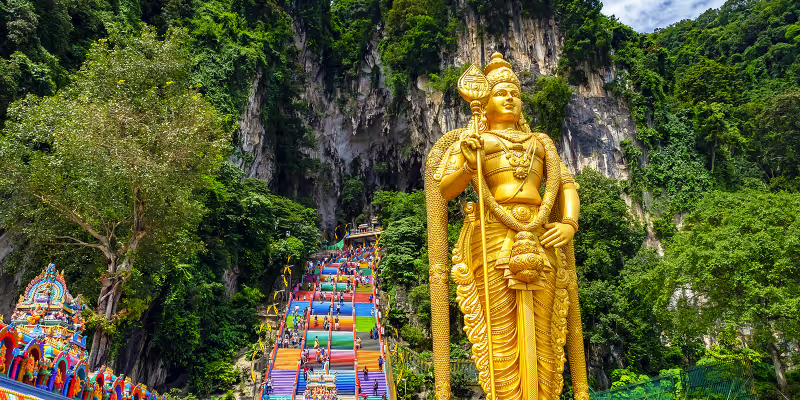
Batu Caves packs three things into one site that most attractions can't manage separately: a free Hindu temple inside a cathedral-sized limestone cave, a rainbow staircase steep enough to make you work for it, and hundreds of wild macaque monkeys who treat the whole complex as their personal territory. Located 13 km north of Kuala Lumpur in Gombak, Selangor, it's a genuine half-day from the city, and one of the most visited Hindu shrines outside India.
Batu Caves is a working pilgrimage site spread across four distinct zones, each with different access requirements and experience types. First-timers often arrive expecting a single cave, the reality is a layered complex where the ground level alone is worth an hour of your time before you attempt the climb.
The Murugan statue is photographable immediately from the forecourt, allow five minutes. The 272-step rainbow staircase, originally built in 1920 and repainted in lively colours in 2018, takes 10–20 minutes to climb depending on your pace and photo stops. Inside Temple Cave, allow 30–45 minutes for the shrines and the dramatic limestone ceiling. Ramayana Cave needs 20–30 minutes and suits visitors who want the cave experience without the stair climb.
The main Temple Cave costs nothing and requires no booking, walk up, pass the dress check at the staircase base, and climb. The paid attractions are Ramayana Cave and Cave Villa, both payable at their entrance gates on arrival.
Ancillary costs: toilets RM2, sarong RM10–15 if needed, parking (see driving section). Third-party platforms sell "Batu Caves tickets", these are tour packages, not entry tickets. No advance booking exists or is needed for the site.
Temple Cave has no ticket queue (free entry). Paid caves see minimal queues on normal days. The staircase itself is where congestion builds, weekends between 10:00 AM and 3:00 PM can be genuinely slow going, with tour groups arriving from 9:30 AM onward.
KTM Komuter runs a direct service from KL Sentral to Batu Caves, the terminus station sits 80 metres from the cave entrance. Key details:
Bus services connect KL to Batu Caves, but specific route numbers and stops are unconfirmed. Check current routes on the Rapid KL website or a local transit app before travelling.
Taxis drop off at the site entrance, no walk from a separate stop. Fare is metered and depends on traffic; expect longer times during the PM peak.
E-hailing services drop off and pick up at the main forecourt parking area directly adjacent to the entrance. Journey time from central KL is roughly 15–25 minutes off-peak; in-app pricing varies by demand and time of day.
Take the MRR2 or DUKE highway from KL, off-peak journey time is about 20 minutes. Parking rates are reported variously as RM2, RM3, or RM5; the most recent sources (2025–2026) suggest RM3, but confirm on-site. The car park sits about 300 metres from the entrance. On weekends, parking fills quickly, arrive early or use the train. Use the official car park and insist on a printed receipt; unofficial collectors operate near the bridge and may not return.
Booking a private chauffeur for Batu Caves: your pickup point is confirmed when you book, with a name-sign meet where applicable. Multi-stop itineraries pair the caves with nearby attractions like KLCC, Bukit Bintang, or Chinatown in a single day, with dispatch available around the clock. Special requests, MPV for large parties, door-to-door service for elderly passengers avoiding tropical heat, oversized baggage, are handled at booking. Pricing is quote on request.
For airport-origin journeys from KLIA, private transport or e-hailing is the practical choice: there is no direct rail link, and the rail option requires a transfer at KL Sentral before boarding the Batu Caves line.
Drive times below are off-peak / AM-peak / PM-peak. Note that PM-peak return journeys to KL are significantly longer in every case, factor this into afternoon departure plans.
Arriving between 7:00 and 9:00 AM on a Tuesday, Wednesday, or Thursday, outside Malaysian school holidays, gives you the best combination of cool temperatures, thin crowds, and an uncrowded staircase before tour groups arrive from 9:30 AM. Everything else is a trade-off.
Malaysia runs 26–35°C year-round. The staircase and forecourt are fully exposed to sun and rain; the Temple Cave interior is sheltered. Rain is more frequent October to December, the steps are manageable when wet but less pleasant, and the descent requires more care. May to September tends to offer slightly more predictable mornings, with showers typically arriving in the afternoon.
The KTM train handles the KL Sentral–to–caves run cleanly. But if you're landing at KLIA and heading directly to Batu Caves, or planning a day that pairs the caves with Petronas Towers, Bukit Bintang, and dinner in Chinatown, the rail-and-re-hail logistics add up fast, especially in PM-peak traffic.
Prime Aces Limousine publishes this guide and offers Corporate Chauffeur Service; Airport Transfer Service; Limousine Rental / VIP Transport; Event Transportation; Cross-Border Transfers. For a packed day visiting several KL landmarks, or for a group needing MPV forecourt drop-off, a single booking covers the full itinerary, flight-tracked airport pickup, one price confirmed before departure, no surge, no taxi queue. First-time bookings can claim an introductory offer through the sign-up form on the site.
To arrange a quote, use the contact form or enquire directly, pricing is confirmed on request based on your itinerary.
The site is open daily from 5:30 AM to 9:00 PM, with the staircase accessible from 6:00 AM to 8:30 PM. Temple Cave entry is free; Ramayana Cave is approximately RM15 and Cave Villa is RM15 for foreigners (confirm both on-site).
Take the KTM Komuter direct to Batu Caves station, it's the terminus, so you can't overshoot, for RM2.60 in about 30–40 minutes. The station exit is 80 metres from the cave entrance.
Shoulders and knees must be covered to enter Temple Cave, enforced at the staircase base for all visitors regardless of gender. If your clothing doesn't pass, sarongs are available on-site for RM10–15.
Allow two to three hours for Temple Cave plus one ground-level attraction like Ramayana Cave. The staircase climb alone takes 10–20 minutes each way; the temple interior warrants 30–45 minutes.
Arrive between 7:00 and 9:00 AM on a weekday, ideally Tuesday to Thursday, outside Malaysian school holidays. Tour groups begin arriving from 9:30 AM, and the 10:00 AM–3:00 PM window is the busiest and hottest part of the day.
.png)
Corporate travel in Singapore depends on more than arranging a vehicle for an executive, client or visiting delegation. The quality of the service is reflected in how carefully each journey is planned, communicated and managed from pickup to drop-off.
.png)
Getting around Johor Bahru is straightforward when the journey only involves one pickup and one destination. It becomes a different kind of booking once Senai Airport, several stops, meetings across different parts of Johor or a longer journey to Desaru enter the itinerary.
.png)
Booking a chauffeur in Singapore is easy enough. The more useful question is what happens once the journey becomes more demanding: a Changi arrival shifts, several meetings run back-to-back, or an executive's schedule changes halfway through the day.


Fixed rates, 24/7 operations, flight-tracked pickups. PAL handles the ground transportation.


.png)
.png)
.png)
.png)
.png)
.png)
.png)
.png)
.png)